

Solar panels are a great way to generate clean and renewable energy for your home or business. They can help you save money on your electricity bills, reduce your carbon footprint, and increase the value of your property.
But do solar panels work in winter? This is a common question that many people have, especially in the UK, where winters can be cold, cloudy, and rainy. You might wonder if solar panels are worth investing in, or if they will need a lot of maintenance during the winter months.
The good news is that solar panels do work in winter, and they can still provide you with significant benefits throughout the year. In this article, we will explain how solar panels work in winter, how much energy they can produce, and how to maximise their performance and efficiency.


How Do Solar Panels Work in Winter?
Solar panels work by converting sunlight into electricity using photovoltaic (PV) cells. The amount of electricity that solar panels can produce depends on several factors, such as:
- The intensity and angle of sunlight
- The temperature and weather conditions
- The size and efficiency of the solar panels
- The orientation and tilt of the solar panels
- The shading and dirt on the solar panels
In winter, some of these factors can affect the performance of solar panels. For example, the days are shorter and the sun is lower in the sky, which means less sunlight reaches the solar panels. Winter weather is often cloudy, rainy, or snowy, which can make it harder to see and weaken the sunlight. Moreover, the temperature can drop below freezing, which can affect the conductivity and resistance of the PV cells.
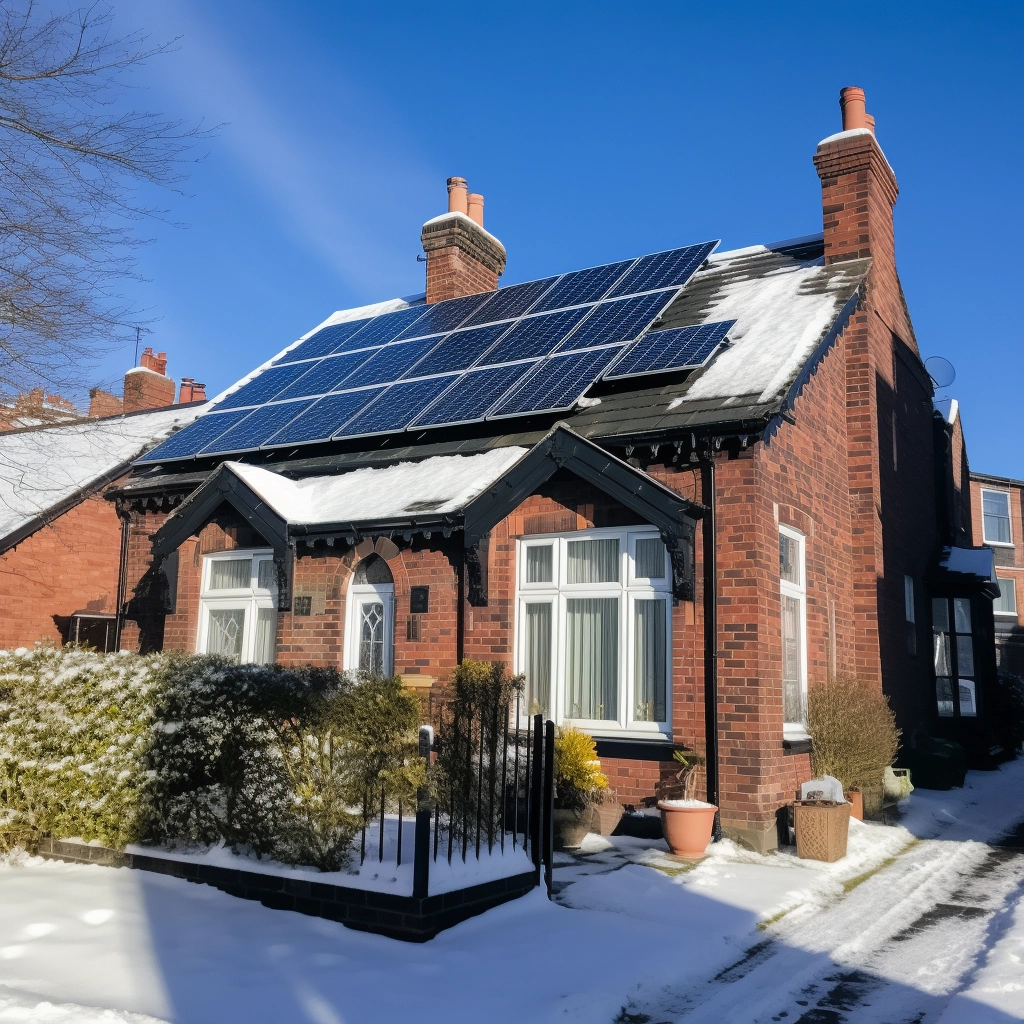
However, this does not mean that solar panels stop working in winter. In fact, solar panels can still produce electricity even on cloudy or snowy days, as long as there is some light available. Moreover, solar panels can actually perform better in cold temperatures than in hot temperatures, as heat can reduce the efficiency of the PV cells.
According to a study by Homebuilding & Renovating, solar panels can produce about 60% of their annual output during the winter months (October to March) in the UK. This means that you can still benefit from solar energy during the winter, as long as you have a well-designed and well-maintained solar panel system.

How to Maximise Solar Panel Performance and Efficiency in Winter?
Some steps can be taken to maximise your solar panel performance and efficiency in winter.
These include:
- Choosing high-quality and high-efficiency solar panels that can capture more sunlight and convert it into more electricity.
- Install solar panels at the best angle and position to get the most sunlight all year round.
- Cleaning your solar panels regularly to remove any dust, dirt, leaves, or snow that can block or reflect sunlight.
- Track your solar system’s performance with a smart meter or online portal. See how much electricity your solar panels generate and use.
- Using a battery storage system or a grid-tie system that can store or sell any excess electricity that your solar panels generate during the day, so that you can use it later when you need it.
- Reducing your energy consumption and improving your energy efficiency by using LED lights, energy-efficient appliances, insulation, and smart thermostats.
By following these steps, you can ensure that your solar panels work well in winter, and that you get the most out of your solar panel investment.
To Summarise
Solar panels are a smart and sustainable way to generate electricity for your home or business. They can work in winter, and they can still provide you with significant benefits throughout the year. However, you need to choose the right solar company to install or repair your solar panels, and to maximise their performance and efficiency.
That’s why you should choose Green Energy Solar, one of the UK’s leading solar panel installation companies in the UK. We have the experience, the expertise, and the reputation to provide you with high-quality and professional solar services. We can help you save money, reduce your carbon footprint, and increase the value of your property.
If you are interested in installing or repairing your solar panels with us, please contact us today for a free quote and consultation. We will be happy to answer any questions you have, and to help you achieve your solar goals.
Solar panels are still effective in winter, but they produce less electricity than in summer. This is because the days are shorter, the sun is lower in the sky, and the weather can be cloudy, rainy, or snowy. However, solar panels can benefit from cold temperatures, as heat can reduce their efficiency. According to a study by Homebuilding & Renovating, solar panels can produce about 60% of their annual output during the winter months (October to March) in the UK.
olar panels can still generate enough electricity in winter to power your home or business, as long as you have a well-designed and well-maintained solar system. The amount of electricity that solar panels can generate in winter depends on several factors, such as the size, efficiency, orientation, tilt, and shading of the solar panels, as well as the location and weather conditions. On average, a 4kW solar system produces around 16 kWh of energy per day, which translates to about 480 kWh of energy per month, or about 5800 kWh of energy per year. However, this can vary depending on the region and the sunlight availability.
Solar panels do not stop working at any specific temperature, but they do lose some efficiency when they get too hot or too cold. Most solar panels have an operating temperature range between -40°C and 85°C, which they are unlikely to ever reach in normal conditions. However, if the temperature exceeds 149°F (65°C), the solar panels will start to lose about 0.05% of their efficiency for every degree Celsius increase. Conversely, if the temperature drops below freezing, the solar panels will gain about 0.05% of their efficiency for every degree Celsius decrease.
The electricity production of a 4kW solar system per day depends on how much sunlight it receives, which varies depending on the season, the location, and the weather. On average, a 4kW solar system will produce between 16 and 20 kWh in a single day, typically peaking during the middle of the day when the sun is at its highest point in the sky. On a particularly sunny day in a sunny location, a 4kW system can produce up to 28 kWh per day.
Contact us now if you want to know how solar panels can help you save money.
We have over 10 years of experience in the solar industry, and we have a team of qualified and certified engineers, electricians, and installers who can deliver high-quality and safe solar services. We are accredited by the Microgeneration Certification Scheme (MCS), Home Insulation & Energy Systems Quality Assured Contractors Scheme (HIES) and The National Association of Professional Inspectors and Testers (NAPIT) which means that we follow the best practices and standards in the solar industry.
We are proud to have many happy customers who have chosen us for their solar projects. You can read some of their testimonials on our website, or check out our reviews on Trustpilot, Google, and Facebook. We are confident that we can provide you with the best solar installation service in South Wales, and that you will be satisfied with our work.
Speak to our team
Enter your contact details in the form below and one of our experienced team members will be in touch to discuss your requirements.


