

How Industrial Solar Panels Can Save Your Business Money Whilst helping the Environment
Have you ever wondered how industrial solar panels can benefit your business?
Industrial solar panels are large-scale photovoltaic systems that generate electricity from sunlight for commercial and industrial purposes. They are different from residential solar panels in terms of their size, capacity, installation, and financing.
Learn about the advantages of adding solar panels to commercial and industrial buildings in this informative guide. We will also discuss the challenges that you may face when considering this option and how you can overcome them.
By the end of this guide, you will learn how solar panels can save your business money and help the environment.


Saving Money on Energy Bills
Industrial solar panels can save you money on energy bills by generating your own electricity from a renewable source. According to a report by Solar Energy UK, industrial solar panels can reduce your electricity costs by up to 65% compared to grid electricity. This means that you can pay less for your energy consumption and have more control over your energy budget.
The amount of money you save depends on several factors. These factors include your location, the size of your system, your energy usage, and your tariff. For example, if you are located in London and have a 4kW solar system that produces 16 kWh of energy per day, you can save around £1,000 per year on your energy bills.
However, if you are located in Edinburgh and your system size and production rate are the same, you can save around £800 per year. This is because the electricity prices vary across different regions in the UK.
Another factor that affects your savings is the type of tariff that you choose for your solar system. There are two main types of tariffs: feed-in tariff (FIT) and smart export guarantee (SEG). FIT is a scheme that pays you a fixed rate for every kWh of electricity that you generate and export to the grid. SEG is a scheme that pays you a variable rate for every kWh of electricity that you export to the grid.
Both schemes can help you earn some extra income from your solar system and increase your savings.
Cost of Installation
One of the main challenges or barriers that you may face when considering installing industrial solar panels is the cost of installation. Industrial solar panels are more expensive than residential ones. This is because they are larger in size and more complex. Additionally, they require additional materials, equipment, labor, and expertise. Moreover, there are also permits and regulations that need to be considered. According to a report by Solar Energy UK, the average cost of installing a 4kW industrial solar system in the UK is around £10,000, which is about twice as much as a 4kW residential solar system.
As mentioned earlier, the cost of installation may vary depending on several factors, such as your location, system size, roof type, design, quality, and supplier. For example, if you are located in a remote area or have a complex roof structure, you may have to pay more for transportation and installation.
Should you desire a larger or more customised system, there may be an additional cost for materials and equipment. To obtain a higher quality or more reputable supplier, you may need to pay a higher price for labor and expertise.
Another factor that affects the cost of installation is the type of permit and regulation that you need to comply with. Depending on your location and system size, you may need to obtain planning permission, building control approval, grid connection approval, health and safety certification, fire safety certification, etc.
These processes can take time and money to complete and may vary from one local authority to another.
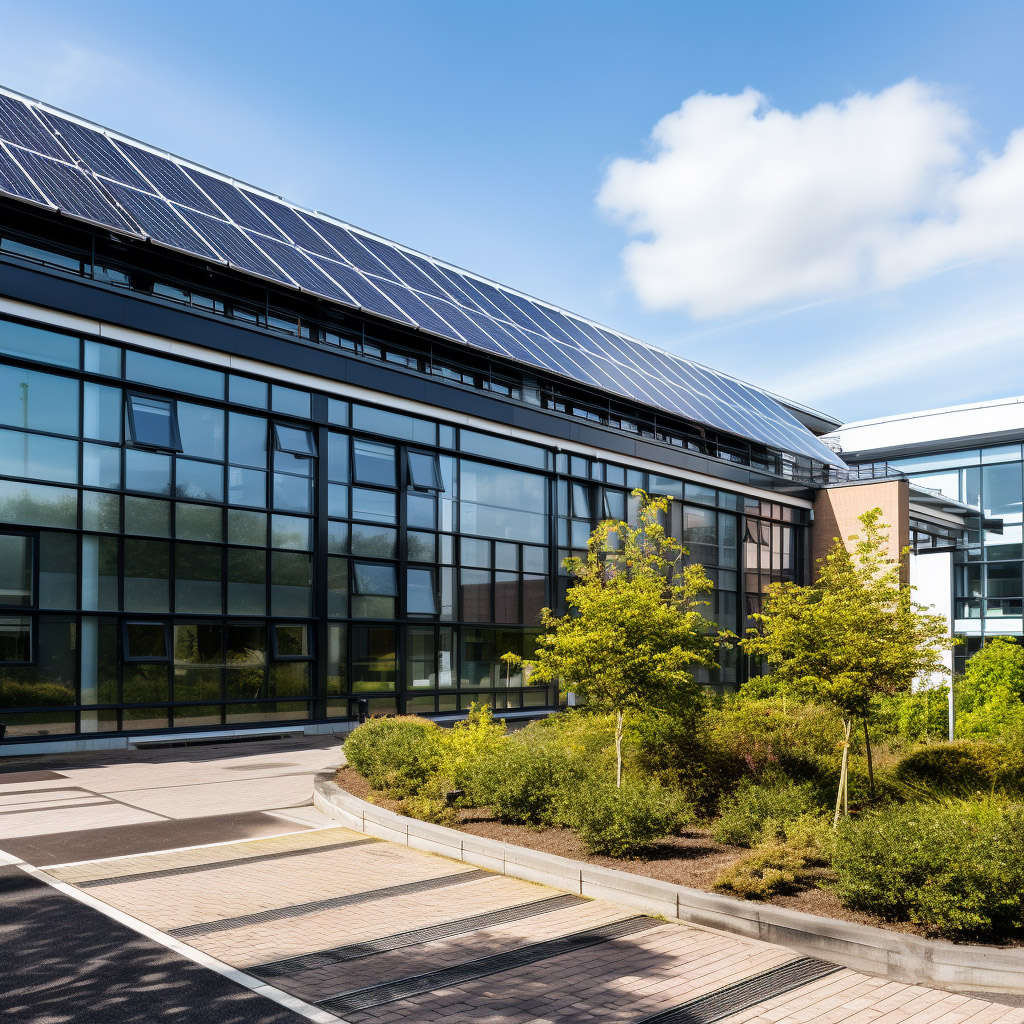

Finding the Right Solutions for Your Situation
Fortunately, there are many ways to overcome the challenges or barriers that you may face when considering installing industrial solar panels. You can find the right solutions for your situation by exploring the various options available to finance, support, and optimise your solar energy system.
One of the most common solutions is to apply for government grants or tax incentives that can help you reduce the upfront cost of your solar system. For example, you may be eligible for the Renewable Heat Incentive (RHI), which pays you a fixed rate for every kWh of heat that you generate from renewable sources.
You may also be able to claim Enhanced Capital Allowances (ECAs), which allow you to deduct 100% of the cost of qualifying energy-efficient equipment from your taxable profits.
Another solution is to take advantage of schemes that pay you for the electricity that you generate and export to the grid. For example, you may be able to join the Feed-in Tariff (FIT), which pays you a fixed rate for every kWh of electricity that you generate and export.
You may also be able to join the Smart Export Guarantee (SEG), which pays you a variable rate for every kWh of electricity that you export.
A third solution is to enter into a power purchase agreement (PPA) with a third-party provider who will own and operate your solar system and sell you the electricity at a lower price than the grid. This way, you can avoid the upfront cost and maintenance responsibility of your solar system and only pay for what you use.
A fourth solution is to lease your solar system from a third-party provider who will install and maintain your solar system and charge you a fixed monthly fee. This way, you can avoid the upfront cost and ownership risk of your solar system and enjoy the benefits of lower energy bills.
The amount of benefit that you can get from these solutions depends on several factors, such as your location, system size, budget, etc. For example, if you are located in London and have a 4kW solar system that costs £10,000 to install, you can save around £1,000 per year with RHI, £2,000 per year with ECAs, £500 per year with FIT or SEG, or £300 per year with PPA or leasing.
Conclusion
In this article, we have informed and educated you about the benefits of installing solar panels on commercial and industrial buildings. We have explained how solar panels can help you save money on your energy bills, increase your property value, and lower your carbon footprint.
We have also discussed the challenges that you may face when considering this option and how you can overcome them by finding the right solutions for your situation.
We hope that this article has given you a better understanding of how solar panels can benefit your business and the environment.
The best solar panels for industrial use depend on your specific needs and requirements, such as your location, roof type, energy usage, budget, etc. However, some of the most popular and reputable solar panel manufacturers for commercial use are Canadian Solar, Trina Solar, Jinko Solar, Hanwha Q CELLS, REC, and Sunpower. You may want to compare their products and prices to find the best option for you.
The cost of commercial solar per kW varies depending on several factors, such as the system size, type of panels, installation complexity, extra equipment, and property location. In the UK, the average cost of commercial solar per kW is around £1,000.
The cost of commercial solar panels also depends on the factors mentioned above. On average, commercial solar panels cost between £16,000-£70,000 for small to medium-sized businesses in the UK.
The cost of a 100kW solar system is approximately £87,780 in the UK. However, these are only estimates and may vary depending on your specific circumstances.
Contact us now if you want to know how industrial solar panels can help your business save money.
We have over 10 years of experience in the solar industry, and we have a team of qualified and certified engineers, electricians, and installers who can deliver high-quality and safe solar services. We are accredited by the Microgeneration Certification Scheme (MCS), Home Insulation & Energy Systems Quality Assured Contractors Scheme (HIES) and The National Association of Professional Inspectors and Testers (NAPIT) which means that we follow the best practices and standards in the solar industry.
We are proud to have many happy customers who have chosen us for their solar projects. You can read some of their testimonials on our website, or check out our reviews on Trustpilot, Google, and Facebook. We are confident that we can provide you with the best solar installation service in South Wales, and that you will be satisfied with our work.
Speak to our team
Enter your contact details in the form below and one of our experienced team members will be in touch to discuss your requirements.


